
Best Fiber Cement Board Supplier in China? | Shengbaoqiang
Which Chinese Fiber Cement Board Supplier Is Worth Trusting?
There is no single best fiber cement board supplier in China. There are a small number of fiber cement board manufacturers running their own forming, curing and coating lines, and a much larger number of traders who buy from those factories and add a brochure.
The narrower question is which supplier's panel fits your wall, and whether it can prove that with documents naming the product, not the brand. This page answers it for our panel, states where it differs from what is sold in North America, Europe and Japan, and lists where we are the wrong choice.
The short answer
If you are building a drained, ventilated facade with visible modules and a deep texture, a 16 mm panel is a different class from the 6 to 12 mm flat sheets that dominate Western supply. Ours is 3,030 × 455 × 16 mm, 1.379 m² per board, with primer and finish coat applied on our own spray line in the same pass. That combination of thickness, module and in-house coating is what we sell, and it is also what makes us unsuitable for some jobs.
If you need a 2,440 × 1,220 sheet to tile over, or a 6 mm soffit lining sold by the pallet from a local warehouse, we are not your supplier and we say so. That sounds like a sales line; in practice it is the quickest way to find out whether a supplier reads your drawing or only your quantity, which is the boundary worth asking about.
Three kinds of Chinese supplier, and only one controls the panel
Buyers treat "Chinese fiber cement board supplier" as one category. It is at least three, and the difference decides who is responsible when a panel fails.
Trading companies hold no line. They quote from a factory's price list, add margin and coordinate shipping. Useful for mixed containers and single invoices; their weakness is distance, because a colour drift has to be negotiated with someone else's production manager.
OEM plants for international brands are real factories, often excellent, but the panel they make for a European or American brand belongs to that brand's specification. Asking who makes it tells you less than asking to whose specification.
Own-line manufacturers selling their own standard product. One fixed specification, published, identical for every market. This is what we are: our catalogue number and our shipping documents describe the same object, and we cannot quietly reformulate to hit a target price.
The test for all three is the same: ask for the production record of the batch you are buying, and ask whether the test reports were issued on that product or on a predecessor.
What our panel is, in one table
| Property | Our standard panel | What it decides on site |
|---|---|---|
| Format | 3,030 × 455 × 16 mm | 455 mm is the course height laid horizontally; a 10 m elevation is 22 courses |
| Area | 1.379 m² per board | Quantity maths for a 150 m² order |
| Surface | Deeply textured decorative face | Reads as material, not as a painted sheet |
| System | Dry-hung on aluminium subframe, rails at 500 mm centres | Open joints, drained and ventilated cavity |
| Coating | Primer and finish, same line, same batch record | Colour consistency, no site primer stage |
| Fire | Noncombustible to AS 1530.1:2024 | Adds no fuel to the facade |
| Asbestos | Not detected, AS 5370:2024, six regulated types | Compliance for import and demolition |
Those seven rows are the commercial argument. Lead time, payment terms and breakage allowance are logistics, and logistics can be negotiated with anyone. The specification cannot be renegotiated after the boards are cut.
Where a 16 mm panel differs from US, EU and Japanese products
Most fiber cement sold in North America and Europe is a flat sheet: 2,440 × 1,220 mm or 3,000 × 1,500 mm, 6 to 12 mm thick, fixed through the sheet, joints filled and taped, painted on site. That is a lining logic: the sheet disappears under a paint film so the wall reads as one plane, and it depends on that paint for its appearance.
Our panel runs the opposite logic: each board is a visible module with an open joint, a 455 mm course height and a texture deep enough to hold a shadow line. Two consequences follow.
Stiffness. Bending stiffness rises with the cube of thickness, so 16 mm is roughly eight times as stiff as 8 mm at the same span. That is why our panel spans 500 mm rail centres with no visible deflection.
The joint stops being a repair. A taped joint is a maintenance item: it cracks when the frame moves and has to be repainted with the wall. An open joint over a drained cavity is a design feature that also solves water management. It is the biggest difference between buying a sheet and buying a system, and why our accessories list exists.
The Japanese market sits closest in module logic, since 455 mm is a standard module there too; but Japanese systems ship proprietary clips and trims, while ours fixes to generic aluminium a local fabricator can cut — which matters when the subframe is a third of delivered cost.
Our spray line, and why the batch record matters
Most Chinese suppliers of decorative panel either buy pre-coated board or subcontract the finish. We coat in-house: primer first, finish after, one line, one batch record.
Primer is a sealing and adhesion layer, and its job is to stop the substrate drawing moisture out of the topcoat before it cures. When primer and finish are applied weeks apart, in different buildings, adhesion is an assumption. When they are applied on the same line in the same shift, it is a record. On a 3,000 m² facade the difference shows up as one panel in fifty reading duller than its neighbour — a defect with no remedy except repainting the elevation.
It also changes cut edges. Every panel cut on site exposes an uncoated edge, and with an in-house line we supply touch-up matched to the same batch, so the repair matches the face. A trader buying from three factories cannot.
What we can prove, and what we cannot
Four reports exist for this product, all naming the board rather than the brand:
- AS 1530.1:2024 — Noncombustible. No sustained flaming in any specimen.
- AS 1530.3:1999 — flame spread index 0, heat release index 0, smoke development index 5. The first two are zero; smoke is five, which is low but not zero.
- AS 5370:2024 — six regulated asbestos types, not detected, reporting limit 0.1%.
- AS/NZS 2908.2 — product conformity, Intertek.
What we cannot prove, and will not imply: no AS 1530.4 fire-resistance level, no EN 13501-1 classification, no ASTM E84 or E136 result. Noncombustible is a material classification, not a rating for an assembly. If your project needs a rated wall, our panel is one component and the system must be tested whole — with your studs, cavity and insulation. A supplier who answers "yes, fire rated" without asking about the assembly is not being helpful.
We also publish no density figure: our catalogue value and our test sample disagree, and we have not reconciled them. Treat any kilogram-per-square-metre number from us as unconfirmed.
Price, and how to check a supplier in a week
A fiber cement board price gap of 30% between two quotes for the same "16 mm" sheet usually has nothing to do with the board:
- Coating — bought-in pre-coated board, or coated on the supplier's own line.
- Subframe — quoted, or excluded and left to the buyer; on a ventilated facade often a quarter to a third of delivered cost.
- Accessories — corner returns, snap joints, dowel bars, apron flashing, sealant: a full schedule or none.
- Packing — EPE between every panel and paper-wrapped edges, or strapped bare. This decides your breakage claim, not your unit price.
- Inspection — third-party pre-shipment included, or "we will send photos".
Compare on a delivered, install-ready basis — panel, coating, subframe, accessories, packing, per square metre of finished facade. Then the gap narrows to the material itself. Five requests settle the technical side:
- Test reports as PDFs, with the product name and dimensions on page one. If the name does not match what you are buying, the report belongs to something else.
- A dated photo of the line running your thickness. Not a showroom, not a catalogue render.
- The batch record for a previous order in the same colour. This separates own-line factories from everyone else.
- A cut-edge sample plus its touch-up material. Ask them to cut a panel, not to send a factory edge.
- The packing specification in writing. Any fiber cement board exporter should state panels per pallet and pallet size; ours is 66 at 3,050 × 800 × 1,000 mm, 792 per 40 ft container, about 1,092 m², in how fiber cement board is packed for export.
Answer all five and the remaining risk is commercial; answer three and the price is irrelevant. Capacity and order flow sit on our fiber cement board factory in China page, product class on cement board for exterior applications, fire on the fire resistance page.
FAQ
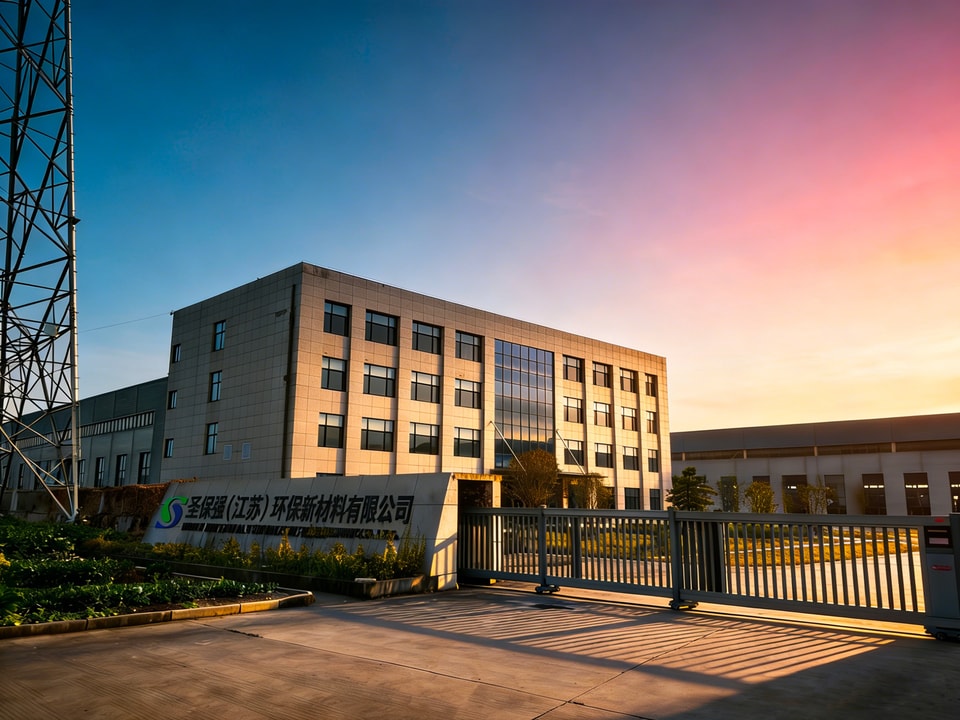
Is Shengbaoqiang a factory or a trading company? A factory. Forming, curing and coating run on our own lines in Jiangsu, primer and finish in one pass under one batch record. We do not resell other plants' board.
What is the minimum order? It depends on colour and texture, because a coating run has a minimum length. Give us the facade area and date and we quote against a real production slot.
Can you supply accessories with the panels? Yes. As a fiber cement cladding supplier we ship the system: wall corner with 70, 90 or 110 mm returns, snap joint, dowel bar, apron flashing, neutral-cure silicone, listed in fiber cement cladding accessories.
Do you ship to the US or EU? We ship, but we hold no ASTM or EN fire classification, so we cannot support a US or EU project requiring a rated assembly. For unrated facades the AS reports still describe the material honestly.
Why 16 mm instead of 8 mm? Because the panel is the visible skin of a ventilated facade, not a substrate under paint. At 16 mm it spans 500 mm rails without deflection and holds a deep texture.
Contact Us