
Fiber Cement Board Factory in China: What to Check Before You Order
Fiber Cement Board Factory in China: What to Check Before You Order
Most buyers who search for a fiber cement board factory in China end up comparing three things: price per square meter, a photo of a texture, and how fast the supplier replies. None of those three will tell you whether the panel on your wall is still straight in year five.
This page is written the other way round. Here is what we make, what we can prove about it, and what we will not claim. If the numbers fit your project, talk to us. If they don't, you have saved yourself a sample shipment.
Who we are
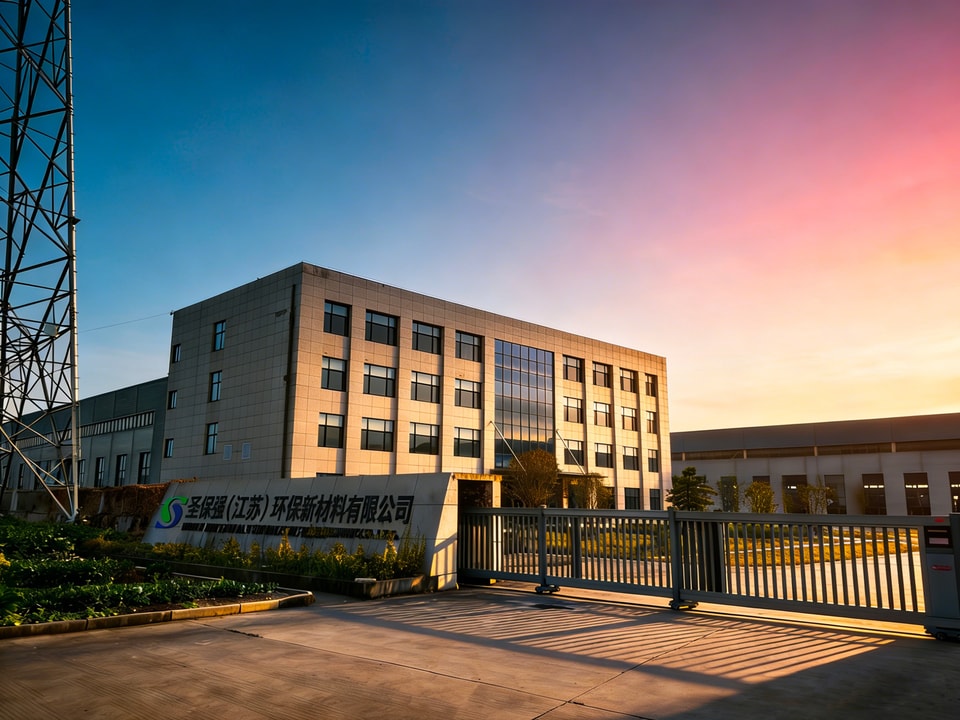
Shengbaoqiang (Jiangsu) Environmental Protection New Materials Co., Ltd. has been making decorative fiber cement wall panels since March 2021. The plant is in Nantong, Jiangsu Province, about two hours north of Shanghai by road, which is also where our export shipments leave from.
We make one product family: decorative fiber cement wall panels for exterior wall cladding, supplied as a dry-hung ventilated facade. We are a fiber cement board manufacturer with a single line, not an exporter with a catalogue of other people's products. We do not sell backer board, we do not sell ceiling tile, and we do not put our name on panels we did not press.
| Founded | March 2021 |
| Plant area | Over 60,000 m² |
| Annual output | Over 1,500,000 m² |
| Standard panel | 3030 × 455 × 16 mm |
| Surface | Wood grain, stone grain, brick pattern, striped, flat, wood wool acoustic |
| Supply mode | Factory direct, project orders and distributor programmes |
A 60,000 m² plant producing 1.5 million m² a year works out to roughly 25 m² per square meter of floor space annually. That ratio is worth knowing as a buyer, because it tells you how much of the process is automated line work and how much is manual handling. Ours is a panel line, not a hand-lay workshop.
Why our standard panel is 3030 × 455 × 16 mm
The market default is a 2440 × 1220 mm flat sheet in 6, 8, 10, 12, 18 or 20 mm. We make a 3,030 mm long, 455 mm wide, 16 mm thick panel with a textured face, designed as one course of a horizontal facade.
The reasoning is arithmetic, not preference.
Each panel covers 1.379 m². At a measured density of 1.22 g/cm³, a 16 mm board weighs 19.5 kg per square meter, so one panel is about 26.9 kg. Two people lift it by hand onto a scaffold. No hoist, no crane, no crane permit on a residential street.
The 455 mm width sets the module. Twenty-two panels run 10 metres of wall, with one horizontal joint line to detail instead of a grid of field cuts. Wider boards mean fewer joints but heavier lifts; at 1220 mm wide in 16 mm the same panel would weigh about 72 kg and stop being a two-person job.
Thickness is where most of the engineering sits. Bending stiffness rises with the cube of thickness, so 16 mm is roughly eight times stiffer than 8 mm at the same span, while weighing twice as much. That is the trade: you spend kilos to buy stiffness, and stiffness is what stops a facade from oil-canning between fixings.
We do not argue that 16 mm is right for every wall. On a low-rise interior partition it is over-specified. On a high-rise exposed facade with a 1.2 m fixing grid, 8 mm flat board is under-specified, and no coating will fix that.
Textures
Texture is the reason most buyers come to us, so it is worth being specific about what each one does.
| Texture | Reads as | Usually specified for |
|---|---|---|
| Wood grain | Sawn or weathered timber boards | Residential facades, villas, hospitality |
| Stone grain | Split or honed stone courses | Commercial podiums, entrance walls |
| Brick pattern | Running-bond brickwork | Renovation where the wall cannot take real brick |
| Striped / grooved | Linear ribbed cladding | Contemporary facades, long horizontal runs |
| Flat | Plain painted panel | Projects where the joint line is the design |
| Wood wool acoustic | Exposed fibre, acoustic face | Soffits, canopies, interior acoustic walls |
The texture is formed in the face and sealed under the factory coating, so the pattern survives the same 10,000 scrub cycles as the flat product. What it does not survive is impact from a scaffold pole, which is why we ship touch-up material with every order.
Two notes from project work. Brick pattern is the texture most often chosen for renovation, because it gives a masonry facade on a wall that has no load capacity left for real brick — but the joint lines on the panel do not align with the brick beneath, so it is a re-cladding decision, not a repair. Wood grain is the texture most often rejected at sample stage, always for the same reason: the approved chip was a different colour temperature from the production batch under overcast light. Approve wood grain outdoors, on the wall, facing the direction the facade faces.
What we can prove
This is the part where suppliers tend to get vague, so here are our numbers and where they come from.
| Property | Result | Standard |
|---|---|---|
| Density | 1.22 g/cm³ | — |
| Flexural strength, saturated | 8.6 MPa | GB/T 7019-2024 |
| Water absorption | 16.5% | GB/T 7019-2024 |
| Impermeability | No damp mark on back face, 24 h | GB/T 30100-2013 |
| Moisture movement | 0.05% | JG/T 396-2012 |
| Thermal conductivity | 0.25 W/(m·K) | — |
| Freeze-thaw | 100 cycles, no delamination or flaking | GB/T 7019-2024 |
| Stain resistance | Grade 0, immersion method | GB/T 9780-2013 |
| Scrub resistance | 10,000 cycles, no substrate exposure | GB/T 9266-2009 |
| Alkali resistance | 96 h saturated Ca(OH)₂, no change | GB/T 9265-2009 |
We also hold an Intertek test report to AS/NZS 2908.2:2000, which is the reference most Australian and New Zealand buyers ask for.
Two things about that report, stated plainly. It covers the samples submitted at the time of testing, so ask us for the sample specification and confirm it matches the thickness and texture you are ordering. And an AS/NZS report is not a CE mark, an ETA, or a UKCA certificate. If your market requires those, tell us at inquiry stage and we will say whether we can support it or not. We would rather lose the order at that point than at the port.
What can be customised, and what cannot
Customisation is real, but it has boundaries. Buyers who are told "anything is possible" usually find out otherwise at the sample stage.
We can adjust: panel length and thickness within what the line can press, surface texture and pattern depth, colour and coating system, panel marking and private label, packaging and pallet configuration, and mixed-texture orders for one project.
We do not change: the cement-silica core formulation. It is what the test reports were issued against, and a different mix means a different report. If a project needs a formulation we have not tested, we will say so.
OEM and ODM work the same way. Send us the drawing or the reference photo, tell us the target market and the annual volume, and we will come back with what is feasible, what the tooling or minimum quantity looks like, and how long the first production run takes. Brands that already sell cladding in their own market tend to start with private label on our existing textures, then move to a custom pattern once volume justifies it.
How an order runs
- Inquiry. Send the project location, wall area, target texture, and destination market. The market matters because it decides which test documentation you need.
- Specification. We confirm the panel, the coating, the joint width and the fixing layout, and issue a spec sheet with drawings.
- Sample. A physical sample of the actual texture and thickness, not a catalogue chip. Colour approval happens here, in daylight, not on a screen.
- Order and production. Deposit, production slot, and a date you can plan shipping around.
- Inspection. Pre-shipment inspection with photographs of the packed pallets, and third-party inspection if you want to appoint one.
- Shipment. Container loading plan, packing list, and the documents your customs broker asks for.
For a first order, most buyers take a mixed container across three or four textures rather than committing a full container to one pattern. It costs a little more per square meter and tells you far more about how the product behaves in your market. Distributors ordering wholesale volumes usually skip the mixed container and go straight to a full load of two textures, on the basis that they already know which two sell.
Before you commit, ask us for these
Four documents, none of which should take more than a day to send:
- The spec sheet for the exact panel you are quoting, with thickness and texture named
- The test report, plus which sample it was issued against
- A packing drawing showing panels per pallet and pallets per container
- The coating system data, including what maintenance it assumes
The reason for this list is that most sourcing mistakes are document mistakes, not product mistakes. A report issued against a 10 mm flat sample tells you nothing about a 16 mm textured panel, even when the report looks official and the standard number is correct. Ask for the sample specification, compare it with the quotation, and if the two do not match, that is the conversation to have before the deposit rather than after.
If a supplier cannot produce the first document on the list, the other three are not worth reading.
Contact Us