
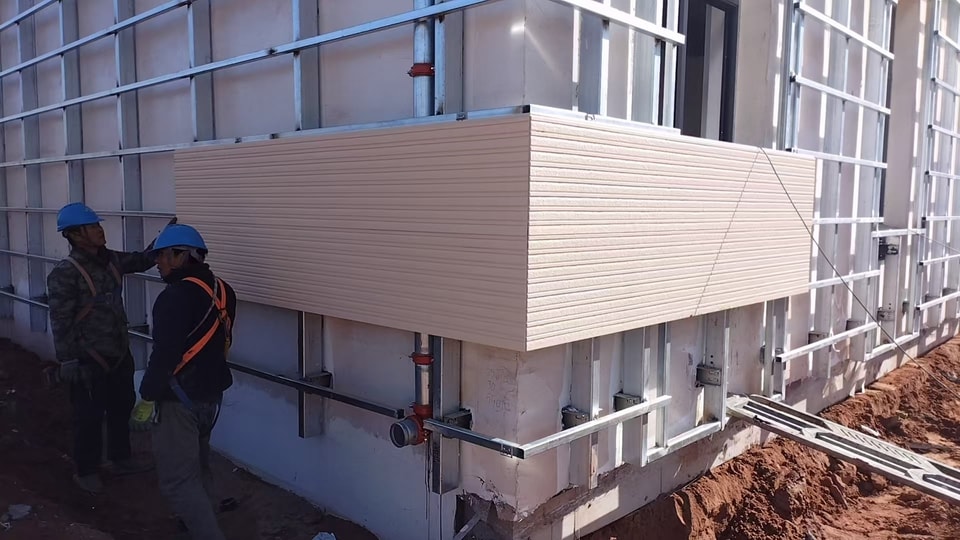
How to Choose Fiber Cement Siding for Exterior Walls
How to Choose Fiber Cement Siding for Exterior Walls
Fiber cement siding is an exterior wall covering made from cement, sand, and cellulose fibers, formed into boards or panels. It offers a painted, woodlike appearance with resistance to pests and weather exposure. Choosing it means matching the product, finish, installation system, and total project cost to your home—not simply picking a color.
What is fiber cement siding, and what does it include?
Fiber cement siding is the visible outer cladding of a wall, not a complete waterproofing or insulation system. Its cement-based composition distinguishes it from vinyl, solid wood, and engineered wood siding. Behind it, a properly detailed water-resistive barrier and flashing help manage water that reaches the wall assembly.
When comparing cement siding materials, recognize these defining components:
· Siding profiles: Horizontal planks, vertical panels, and shake or shingle styles create different wall patterns.
· Finish options: Primed products require painting; factory-finished products arrive with their color applied.
· Trim and accessories: Corner boards, battens, and opening trim complete the design, while flashing manages vulnerable transitions.
Treat those components as one coordinated specification. Ask bidders to identify the exact product and finish rather than quoting only “fiber cement.”
Profiles and trim shape the finished exterior
Start with the house’s proportions, then choose the siding pattern. Request a drawing showing seams, corners, and window transitions before approving materials. Use these examples to frame the design discussion:
· Horizontal lap siding: Consider it for a continuous, layered appearance across broad walls.
· Fiber cement vertical siding: Explore panel layouts for a strong vertical pattern or a contrasting gable treatment.
· Fiber cement board and batten siding: Combine panels with narrow battens for a farmhouse-inspired exterior.
· Shake or shingle accents: Consider a limited accent area rather than introducing another pattern everywhere. These formats are available within manufacturers’ siding ranges.
Specify fiber cement siding trim alongside the wall covering. Compare trim width, corner treatment, and color on physical samples; a small online swatch cannot show the entire composition. Ask how panel seams and battens will align around openings rather than leaving those decisions until installation.

Weather resistance depends on the wall system
Fiber cement belongs among durable siding options, but weather-resistant siding is not permission to ignore drainage. Manufacturer instructions address water-resistive barriers, flashing, fastening, and clearances because the assembled wall—not the board alone—must manage exposure. Water resistance does not make every joint waterproof.
Ask the installer to explain roof-to-wall transitions, window flashing, and clearances above soil, paving, and roofing. The required dimensions depend on the selected product and detail. Do not accept a universal gap measurement copied from an unrelated installation guide.
If researching fiber cement siding in Indianapolis, request the manufacturer’s locally applicable product instructions and a written explanation of how the proposed assembly meets project requirements.
How does fiber cement vs vinyl compare?
Fiber cement and vinyl differ in composition, installation demands, and upkeep. Vinyl generally offers lower installed costs and does not require routine painting; fiber cement provides a paintable surface but involves finish maintenance. Compare complete local proposals rather than assuming one material always delivers better value.
Priority | Comparison to make |
Appearance | View full-size samples, seams, texture, and trim together. |
Initial budget | Compare identical removal, repair, and installation scopes. |
Maintenance | Review cleaning, painting, and sealant obligations. |
Performance | Request product-specific documentation, not broad material claims. |
For any home exterior materials comparison, rank these priorities before discussing upgrades. That keeps an attractive sample from overshadowing a maintenance requirement you would rather avoid.
Understanding fiber cement board siding cost
Fiber cement board siding cost includes more than the boards. Wall area, architectural complexity, product selection, existing conditions, and local labor affect the installed price. Removal, equipment, disposal, permits, and repairs can also change the total substantially.
Request itemized proposals covering:
1. Preparation: Existing siding removal, disposal, and assessment of exposed walls.
2. Wall protection: Repairs, weather barrier, flashing, and required accessories.
3. Finished exterior: Siding, trim, fasteners, painting or factory finish, and labor.
4. Uncertainty: Written allowances or unit prices for concealed damage discovered after removal.
Compare the same scope across bids. A lower total that excludes painting or wall repairs is not equivalent to a complete installation proposal. Manufacturer budgeting guidance likewise recommends examining materials, labor, and miscellaneous project expenses separately.
How should fiber cement siding installers handle fastening?
Fiber cement siding installers should follow the exact product’s fastening schedule, approved fasteners, and applicable project requirements. Learning how to nail fiber cement siding starts with that documentation—not a universal nail size or spacing. James Hardie, for example, recommends blind nailing for certain lap siding applications, while other conditions can require different fastening methods.
Ask prospective installers to explain their fastening plan and provide comparable project references. Read fiber cement reviews for specific observations about communication, detailing, and follow-up, rather than relying on star ratings alone.
Also ask about cutting controls. Power-saw cutting can release respirable crystalline silica; OSHA describes outdoor dust-collection methods for this task. A credible installation plan should address worker protection and dust control, not just production speed.
Maintenance and environmental claims deserve scrutiny
Siding with fiber cement still requires care. Follow the manufacturer’s cleaning guidance and inspect finishes and sealants; James Hardie recommends low-pressure cleaning rather than aggressive pressure washing.
For eco-friendly siding claims, request a product-specific environmental product declaration. It documents life-cycle impacts rather than proving universal environmental superiority. Compare equivalent products and assessment boundaries before drawing conclusions.
Contact Us