
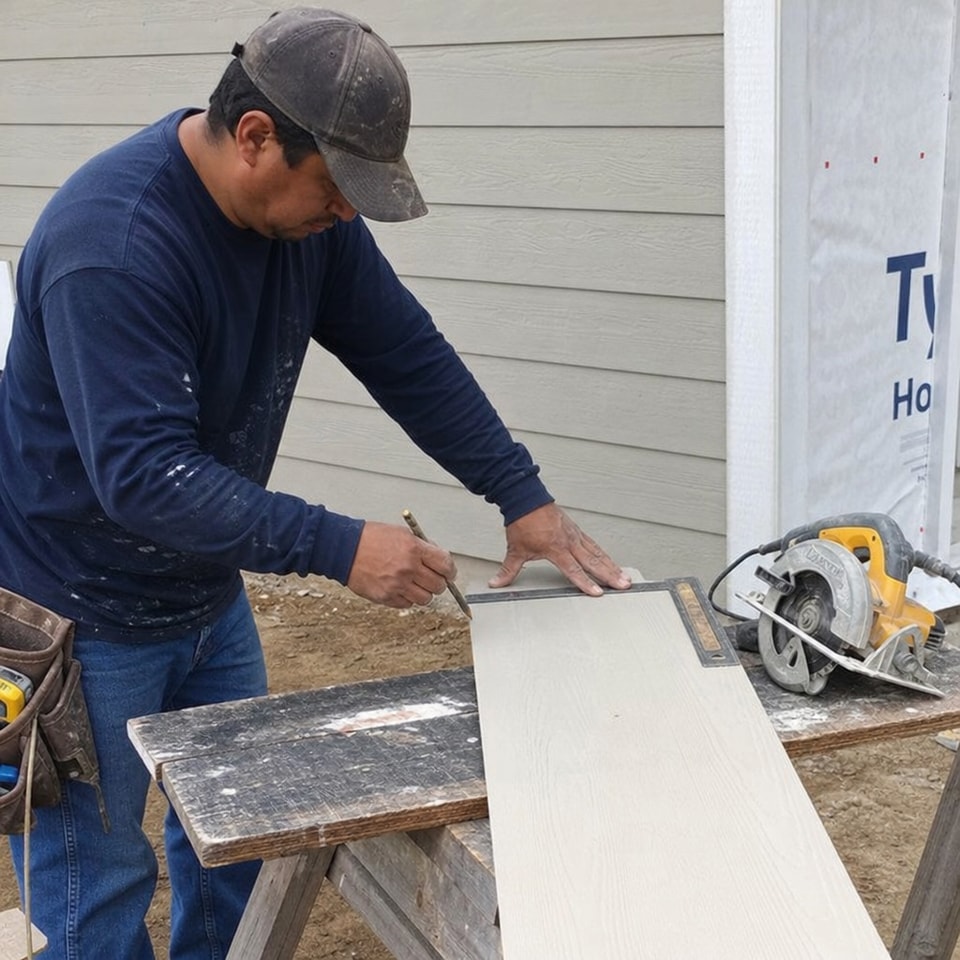
How to cut fiber cement board
how to cut fiber cement board
Fiber cement board is strong and stands up to weather. It is common for siding, outside cladding, soffits, and cement siding panels. To cut it cleanly, you need the right blade, good dust control, and solid support. Fiber cement board is denser and more rough than wood. This guide shows the best way to cut fiber cement board and how to cut cement fiber board siding with less dust, fewer chips, and less waste.
How do you cut fiber cement board safely?
You cut fiber cement board safely by holding the board up well, marking the cut line well, using a carbide or fiber-cement blade, and keeping dust down at the source. Dry cutting with a fast saw can make harmful dust, so work outdoors when you can. Wear a fitted respirator, eye protection, and hearing protection. Use dust extraction if your tool has it. For fiber cement board siding installation, plan cuts before you fasten the board. That way, each piece stays flat and can be trimmed without cracking.
Before cutting, check the maker's instructions for the specific cement fiberboard you are using. Some panels have a smooth face. Others have wood, brick, stone, or other texture. If the board has a finished face, cut from the back when you can. That helps protect the visible side.
Gather the right tools and materials
The best way to cut fiber cement board depends on the cut. A circular saw works well for long straight cuts. Shears, a jigsaw, or a score tool can be better for small trims. If you are cutting larger cement siding panels, get help so the board stays steady.
Useful tools and supplies include:
· Fiber-cement circular saw blade or carbide blade with fewer teeth
· Circular saw with dust control, or fiber cement shears for low-dust cutting
· Jigsaw with carbide-grit blade for curves and notches
· Straightedge, square, pencil, chalk line, and measuring tape
· Flat workbench, sawhorses, or scrap board
· Clamps to keep the panel from moving
· Respirator, safety glasses, gloves, and hearing protection
· Vacuum or approved dust collection system
If you work with a board size like 3030x455x16 mm and a weight of 28 kg, plan your setup before you lift it. A panel that size can be awkward, even if the weight is fine. Poor support is one of the easiest ways to crack an edge.
1. Measure and mark the cut line clearly
Start by measuring the opening, edge, or overlap where the board will go. Mark the cut line with a pencil or chalk line. Then check the measure again before you cut fiber cement board. It is better to check twice than to ruin a panel with a short cut.
For siding, allow for required gaps, trim space, and expansion space based on the install guide for your product. If the board has a decorative face, mark the back side when you can. Still transfer key marks with care so the finished side lands right. Use a square for end cuts so the board fits cleanly against trim or nearby panels.
2. Support the board across its full length
Place the cement fiberboard on a flat, stable surface before cutting. Long boards should be supported near both sides of the cut line so the offcut does not drop and tear the edge. If you use sawhorses, add plywood, foam board, or scrap strips under the board to cut shake.
Clamping helps a lot when you cut narrow strips or trim textured cement siding panels. Do not tighten clamps too hard on the finished face. Use a scrap block to spread the pressure. The goal is to keep the panel still without crushing the texture or leaving marks.
3. Cut straight lines with a circular saw
Can you cut fiber cement board with a circular saw? Yes. It is one of the most common ways to make long, straight cuts. Use a blade made for fiber cement cutting. Set the blade depth just a little deeper than the board. Move at a steady pace and do not force the tool.
Cut with the back side up if that gives you a cleaner face on your material. Keep both hands on the saw. Stand out of the dust path. Let the blade reach full speed before it enters the board. If the saw slows, chips too much, or drifts, stop and check the blade and support.
For cleaner results:
· Cut slowly enough to limit edge blowout, but not so slowly that heat builds up.
· Keep the saw base flat on the board during the cut.
· Use a straightedge guide for long rips.
· Replace dull blades; fiber cement wears blades faster than wood.
· Vacuum dust from the work area instead of sweeping it into the air.
4. Use shears or scoring for low-dust cuts
When dust control matters most, fiber cement shears can be a strong choice. They make less dust than a circular saw and work well for trimming siding pieces to length. The tradeoff is speed and edge quality. Shears can cut cement board with less dust, but they may leave a rougher edge, especially on thicker boards.
A score-and-snap method can work for some thin cement board products, but not for every siding panel. Score the line a few times with a carbide scoring knife. Support the board close to the score, then snap down with even pressure. If the board resists or breaks unevenly, switch to a saw or shears instead of forcing it.
5. Make notches, holes, and detail cuts carefully
For outlets, pipes, corners, and trim details, mark the cutout on the back of the board and drill starter holes at inside corners. A jigsaw with a carbide-grit blade works well for careful detail cuts. Keep the board supported near the cutout so the center piece does not shake and chip the area around it.
Avoid sharp inside corners when you can, because they can become stress points. A drilled round spot at each corner helps reduce cracking and gives the jigsaw blade a smoother turn. Test-fit the piece before you fasten it, then make small changes instead of taking off too much.
What should you do after cutting cement fiber board siding?
After cutting cement fiber board siding, clean the edge, remove dust, and seal or finish the cut edge if the maker says to. Fresh cut edges can take in moisture more easily than factory-finished edges, so follow the coat, primer, or touch-up steps for your board. This matters most on open ends, butt joints, and spots near trim.
If you use prefinished boards, protect the surface while you handle them. Some products use imported paint that can last up to 30 years, and some may also have an SGS certificate. Even so, cut edges and install damage should be handled by the supplier's guide. Wipe off residue with a clean cloth and avoid rough cleaning that could dull the finish.
6. Test-fit and fasten the panel correctly
Place the cut panel in position before you add final fasteners. Check that edges line up, gaps stay even, and the grain direction matches nearby boards if the face has a wood, brick, stone, or similar pattern. A clean cut can still look wrong if the texture runs the wrong way.
Fasten the board by the siding system rules, using the right nails or screws and the right spacing. Do not force a warped or tight piece into place. Trim it a little so it sits flat. Good fit lowers stress on the board and helps the finished job look professional.
Common cutting mistakes to avoid
Many cutting problems come from rushed setup, not from the cut itself. Fiber cement is tough, but it rewards steady handling and careful prep. Use this checklist before every cut:
· Do not cut without a respirator and eye protection.
· Do not leave the board unsupported on one side of the cut.
· Do not use a wood blade if it chips, heats up, or dulls fast.
· Do not ignore the finished face direction on textured panels.
· Do not install a piece before sealing needed cut edges.
· Do not sweep dry dust into the air after cutting.
Final cutting tips for cleaner results
The best way to cut fiber cement board is to match the tool to the job: circular saw for straight production cuts, shears for less dust, and jigsaw work for notches and curves. Keep the panel steady, cut from the side that best protects the finish, and control dust from the start. With patient measuring, the right blade, and careful edge care, you can cut fiber cement board cleanly and get it ready for a strong siding install.
Contact Us