
How Thick Is Fiber Cement Board? 6–18 mm by Application
How Thick Is Fiber Cement Board? 6–18 mm by Application
Short answer: 6 mm to 18 mm. The number you need depends on what's behind the panel, not on what looks right in a sample.
Most of the confusion comes from the term. In North America "cement board" means tile backer, the grey sheet that goes under ceramic. In Europe and Asia the same phrase covers exterior cladding, which is thicker because it hangs off a wall and takes wind. Two products, one name. So when a buyer asks how thick a fiber cement board should be, the answer starts with "which one".
The thickness ranges, by product type
Tile backer is the thin end: 6 mm for floors and overlays where there's continuous support, 12 mm for shower walls and wet areas. Exterior siding boards run 8 to 10 mm. Rainscreen cladding panels, the kind with a texture on the face and a fixing behind it, sit at 12 to 16 mm. Heavy public-area work goes to 18 mm.
Imperial sizes explain some odd numbers. A quarter inch is 6.4 mm and half an inch is 12.7 mm, so a US "1/2 inch" backer measures 12.7 while the metric board beside it measures 12.0. Ordering from Asia? Buy on the metric figure and check it against your local spec.
That's the market picture. What matters more is the rule underneath it: thickness buys stiffness and impact resistance, and both scale faster than the number suggests. Going from 12 to 16 mm adds a third to the section depth but roughly doubles the panel's resistance to bending. It also adds weight you have to lift, fix and pay freight on. You can see the range side by side in our flat board selection.
Thickness is specified, not invented. ISO 8336 covers fibre-cement flat sheets and the tolerances around them, and GB/T 7019 sets the test methods behind the density and bending figures printed on any Chinese datasheet, ours included. If a supplier can't say which standard his tolerance comes from, treat the catalogue number as a claim rather than a specification.
What thickness changes on site
Three things, and fitters feel all three.
Stiffness first. A thin panel needs closer support; a thick one can span further between rails. If your rail spacing is already fixed by the design, the panel thickness has to match it, not the other way round.
Then fixings. A 6 mm board gives a screw very little to bite. Pull-through is the failure you see on thin sheets, especially where someone has over-driven a driver. At 16 mm there's enough depth for the connector to seat properly.
There's arithmetic behind this that fitters never see. Bending resistance rises with the square of thickness, stiffness with the cube, so 12 to 16 mm isn't a third more strength: it's about 78 per cent more bending resistance and double the stiffness. That's why a 16 mm heavy-duty panel holds the same wind load on wider rails.
And weight. This is the one that gets ignored at the quoting stage and hurts at the lift.
Table 1 — Thickness by application (market norms, not a substitute for the project specification)
| Application | Typical thickness | Why |
|---|---|---|
| Floor overlay, continuous support | 6 mm | Low load, low weight |
| Tile backer, walls and showers | 12 mm | Screw embedment, tile load |
| Exterior siding, nailed or screwed | 8–10 mm | Wind load, moderate span |
| Rainscreen cladding, textured face | 12–16 mm | Impact, span between rails, fixing depth |
| Heavy-duty public areas, ground floor | 16–18 mm | Impact resistance |
| Fire-resistant or acoustic assemblies | Per tested system | Thickness alone doesn't give a rating |
What each thickness weighs
Weight is where thickness stops being abstract. Our boards test at 1.22 g/cm³ apparent density, so the arithmetic is simple: thickness in metres times 1,220 kg.
Table 2 — Weight at 1.22 g/cm³
| Thickness | kg per m² | 2440 × 1220 mm sheet (2.98 m²) |
|---|---|---|
| 6 mm | 7.3 | 21.8 kg |
| 8 mm | 9.8 | 29.1 kg |
| 12 mm | 14.6 | 43.6 kg |
| 16 mm | 19.5 | 58.1 kg |
| 18 mm | 22.0 | 65.4 kg |
A 16 mm sheet at 2440 × 1220 is a two-person lift, and not a comfortable one. If your crew is fixing overhead, that number decides the method more than any drawing does.
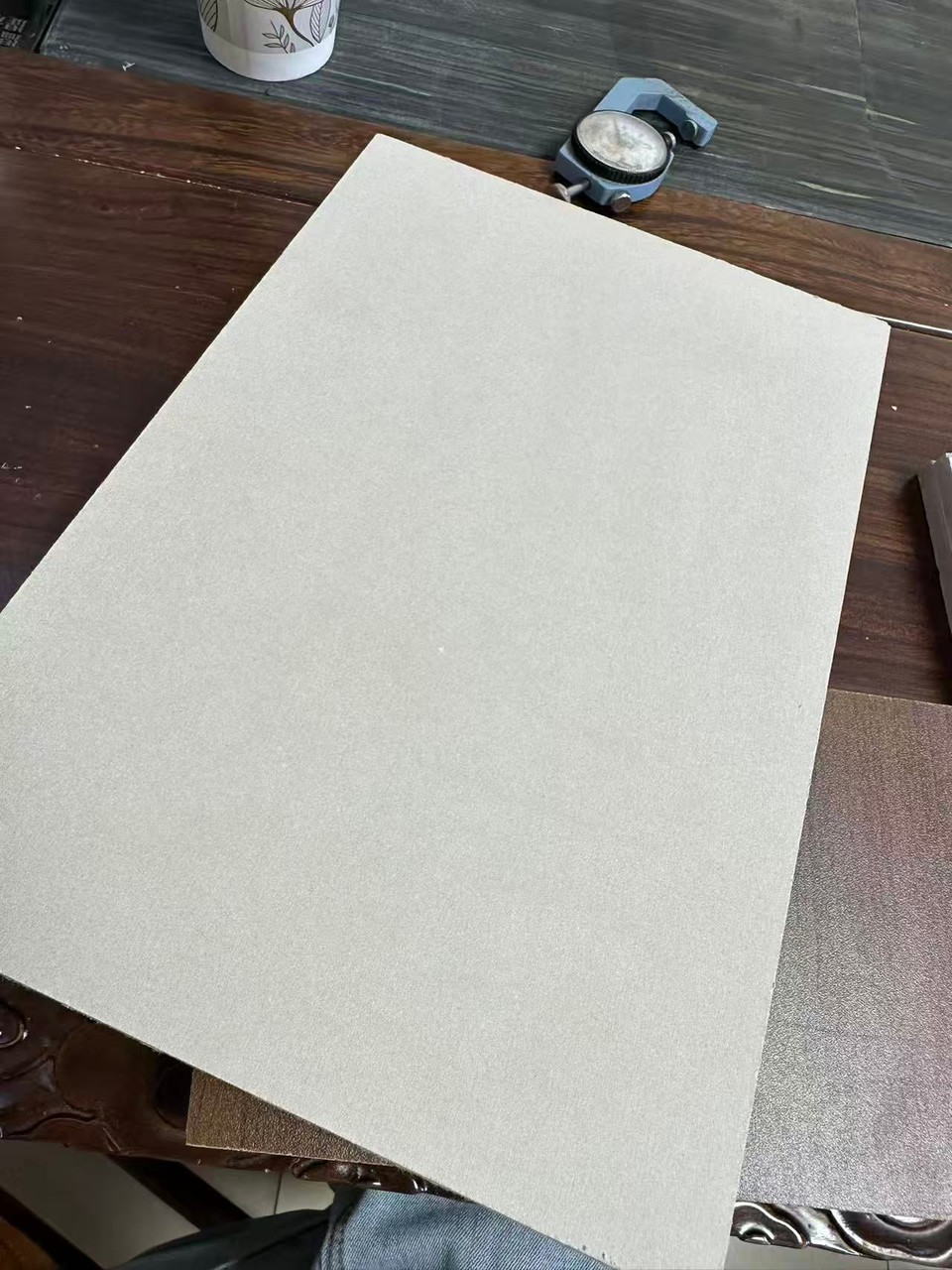
The same 16 mm is 58 kg as a 2.98 m² sheet and 30 kg as our 1.38 m² cladding panel. Thickness says nothing about what one unit weighs until you know its face size.
Our two formats
We make two product lines and they don't overlap, which saves a lot of the thickness argument.
Table 3 — Shengbaoqiang standard formats
| Format | Size | Thickness | Weight | Where it goes |
|---|---|---|---|---|
| Textured cladding panel | 3030 × 455 mm | 16 mm | ~30 kg per panel (1.38 m²) | Ventilated facades, dry-hung |
| Flat cement board | 2440 × 1220 mm | 6 / 8 / 12 / 16 / 18 mm | 21.8–65.4 kg per sheet | Linings, soffits, general board work |
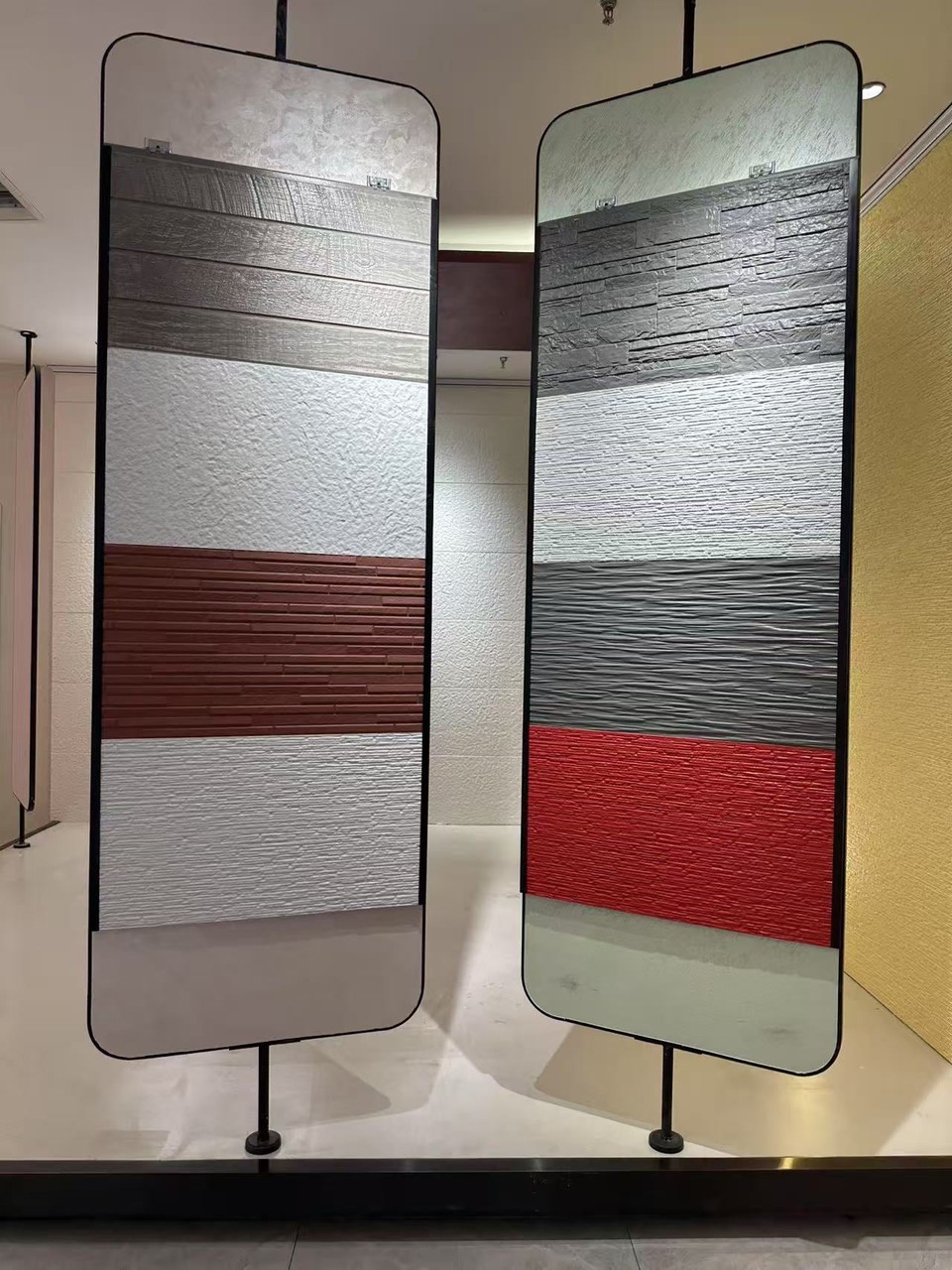
The textured panel comes in wood grain, linear stripe, brick, stone grain, grooved and flat faces. All of it is 16 mm, because the face texture doesn't change what the panel has to do structurally. The flat board is where you pick a thickness, and the choice is driven by span and fixing, not by the finish.
When you compare our 16mm fiber cement board against a flat sheet from another mill, compare density as well as thickness. Two panels can both measure 16.00 mm and sit 15 kg apart per square metre, which shows up in the freight bill and in what your fixings carry.
Contact Us